


Runs automatically
A goblin doesn't wait to be asked. It wakes on a schedule or on events from GitHub, GitLab, Slack, and Linear — the work is underway before anyone typed a prompt.
Our goblins dig through your team's context — code, tickets, docs, monitoring tools, knowledge base
and run tasks in a loop: they triage overnight, fix what broke, review every PR, and build new features while you sleep.
2-click setup · $100 in free credits · No credit card required
A goblin is a remote agent: it works on an isolated cloud machine, never on your laptop. Every task gets a fresh one with your repository, your tools and your conventions already in place, so there are no worktrees to juggle, no ports to fight over, and nothing to clean up when it is done.
Goblins keep working after you close your laptop. Hand over as many tasks as you like, from a one-line fix to a whole feature, and pick them up from Slack, your phone or anywhere you have integrated with TaskGoblin.
What is a cloud sandbox?Every AI goblin runs the same loop — discover, build, verify, remember. Here's the machinery underneath.
A goblin doesn't wait to be asked. It wakes on a schedule or on events from GitHub, GitLab, Slack, and Linear — the work is underway before anyone typed a prompt.
Before touching code, a goblin digs through your issues, threads, docs, and history — so it acts on the whole picture, not just the diff in front of it.
Every goblin works in its own isolated cloud sandbox — in parallel, around the clock. Your credentials are never exposed to the LLM.
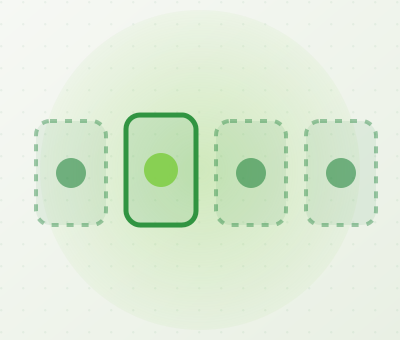
The goblin that wrote the code never grades its own work. A second one runs an adversarial review using a different LLM provider, reconciling findings in a loop until nothing's left dangling.
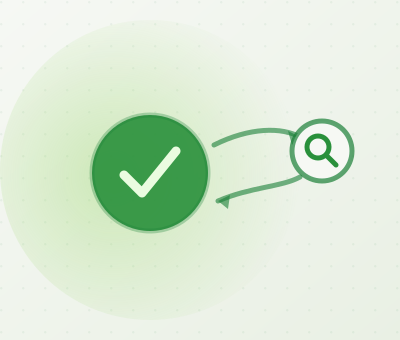
Your repos, your test commands, your code conventions — kept in a shared playbook every goblin reads. Correct one once, and every goblin after it gets it right.
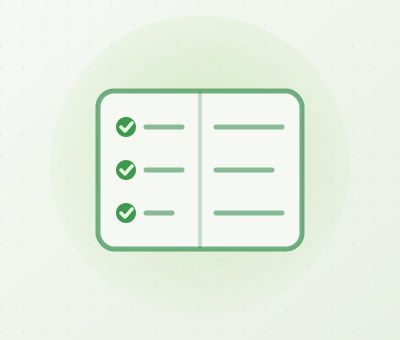
Every shift ends with a handoff note — what worked, what broke, what's next. The next goblin starts where the last one stopped, never from zero.
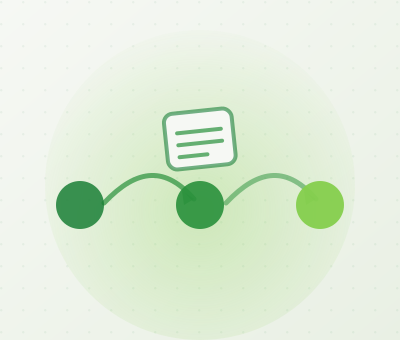
The moment a pull request is opened, a goblin clones the repository, gathers the context, analyses the changes using frontier models, and publishes a detailed review — a summary, security findings, and concrete improvement suggestions as inline comments.
Mention @taskgoblin to ask follow-ups or have it implement the fixes for you.
Assign an issue to @taskgoblin — just like you would to a teammate — and get a pull request ready for review in minutes, so you can focus on the decisions that matter.
Ask @taskgoblin to plan first and it replies with a “Coding Plan” that breaks the work into manageable steps. And there's no limit on how many you can hand off at once — goblins work in parallel, each in its own isolated cloud sandbox, clearing your entire backlog in minutes.
A prompt gets you one answer. A loop gets you a teammate: goblins wake on schedules and events, do the work, check it, write down what happened, and pick it up again on the next turn — no one standing by to press enter.
You don't have to start from a blank page. Pick one of our many templates — overnight triage, review every pull request, patch what monitoring flags — and your first loop is running today.
TaskGoblin is built for agentic SDLC workflows. It pulls your org's operating context together from across every tool and team conversation — code, tickets, docs, monitoring, cloud — and reasons over it to move work forward in the channel or thread where it's already happening. It investigates, plans, opens PRs, captures team knowledge, and keeps everyone aligned as work evolves.
Agentic SDLC is a software delivery practice where AI agents participate meaningfully across the complete software development lifecycle — planning, requirement analysis, design, coding, testing, deployment, and maintenance. Instead of your team bouncing between point tools, our goblins work alongside you, carrying context across phases, taking action on your behalf, capturing what the team learns, and staying accountable for its actions.
Yes. Every task runs in its own branch and sandbox, so they never step on each other. Hand over five issues at once and the goblins work all five in parallel, opening a separate merge request for each — no queue to babysit.
Slack, GitHub, GitLab, and Linear today — each one is a 2-click connection. More connections are on the way.
Sign up for free, in 2 only clicks, and hand over your first task — assign an issue to the goblin or mention @taskgoblin in a thread. No credit card required.
You pay for time, not tokens. There are no plans and no subscription — you buy prepaid credits, and each run is metered per second of the agent's actual working time, billed at $0.40 a minute. Bring your own LLM account and it drops to $0.15; bring your own LLM account and your own sandbox server and it drops to $0.05. Every new organisation starts with $100 in free credits, no card required.
Yes. Each goblin works in an isolated sandbox scoped to a single organisation, so one team's work can never touch another's. Goblins only see the workspaces, repositories, and projects you explicitly connect — nothing else — and your credentials are injected around the agent, never handed to it to read. Disconnect a connection at any time and the goblin loses access on the spot.
No — goblins amplify your team, they don't replace it. They take the repetitive work (reviews, triage, routine fixes) off your plate so your engineers can spend their time on the decisions that actually need a human.
2-click setup · $100 in free credits · No credit card required
Our agent reads untrusted code and clones whole repositories. Here is the proxy architecture that injects secrets into requests without the agent ever holding them.
Personal agent tools made one developer faster. The next interface is not a better window on your laptop — it is an agent that lives in your issue tracker, your repos, and your Slack, where the whole team already works.
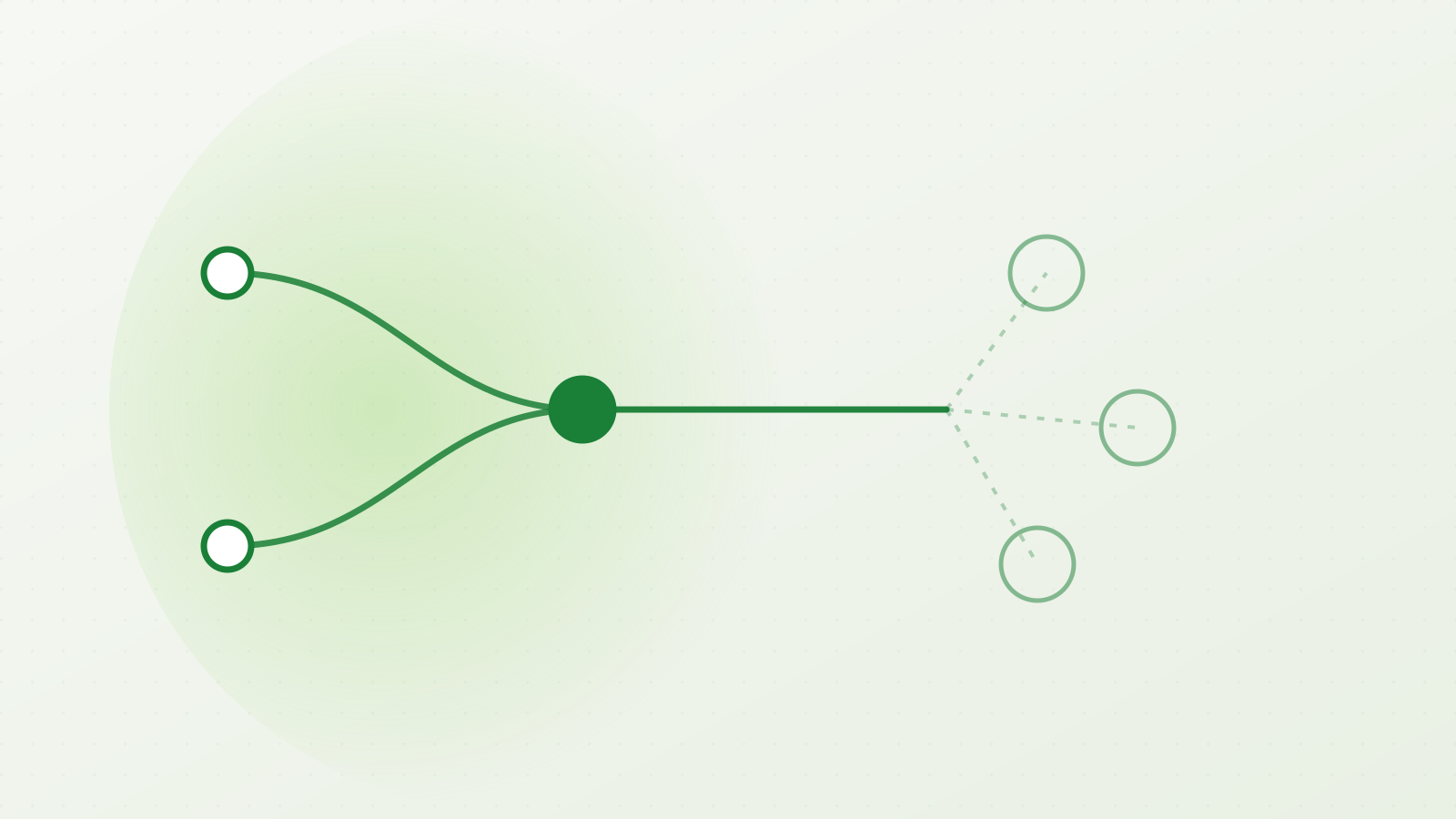
Coding agents made shipping cheap, but the systems around your code — issues, docs, CI, release notes — still get maintained by hand. Here is how we close that gap with recurring, autonomous agent runs.