Security
How TaskGoblin keeps your secrets out of the agent
Our agent reads untrusted code and clones whole repositories. Here is the proxy architecture that injects secrets into requests without the agent ever holding them.
Product updates, engineering notes, and news from the team building AI teammates.
Our agent reads untrusted code and clones whole repositories. Here is the proxy architecture that injects secrets into requests without the agent ever holding them.

Personal agent tools made one developer faster. The next interface is not a better window on your laptop — it is an agent that lives in your issue tracker, your repos, and your Slack, where the whole team already works.
Coding agents made shipping cheap, but the systems around your code — issues, docs, CI, release notes — still get maintained by hand. Here is how we close that gap with recurring, autonomous agent runs.
"There are no dumb questions" is good advice for people. For an autonomous agent that works while you sleep, a question it could have answered itself is the most expensive thing it can do.
When agents can execute almost anything you hand them, the bottleneck stops being whether they can do the work and becomes whether you can hand it to them fast enough. That is a harder problem than it sounds.

The comforting story is that AI levels the playing field for engineers. The uncomfortable one is that it widens the gap — because it rewards knowing why the rules exist, not just following them.
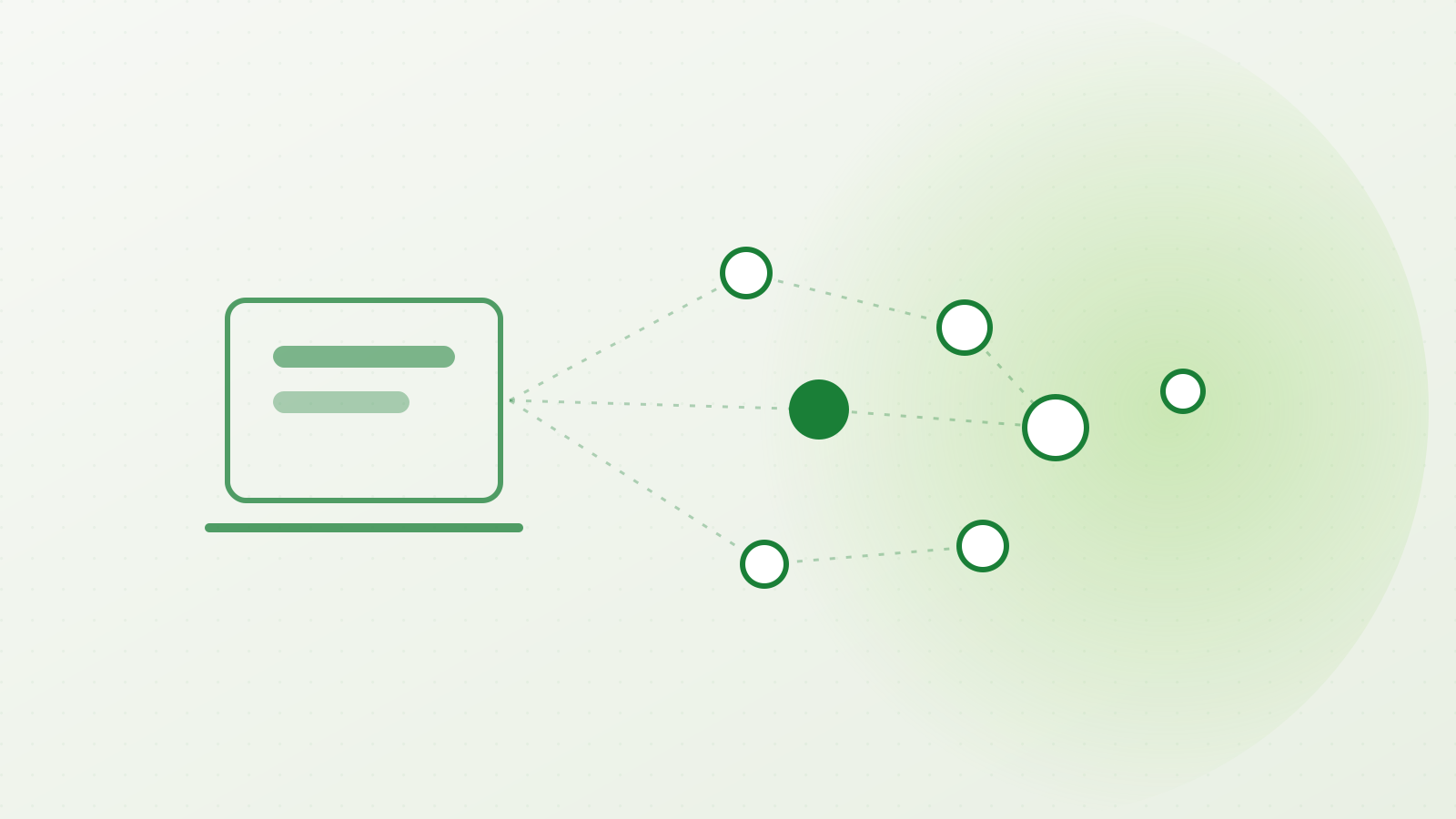
An agent that lives in your editor stops when you close your laptop. As agents get more autonomous, that constraint gets harder to justify — and the async, remote model wins on plain arithmetic.

When you ask an agent "does this work?", you are asking it to grade its own paper with the same reasoning that wrote the answer. Ask it to show you instead.
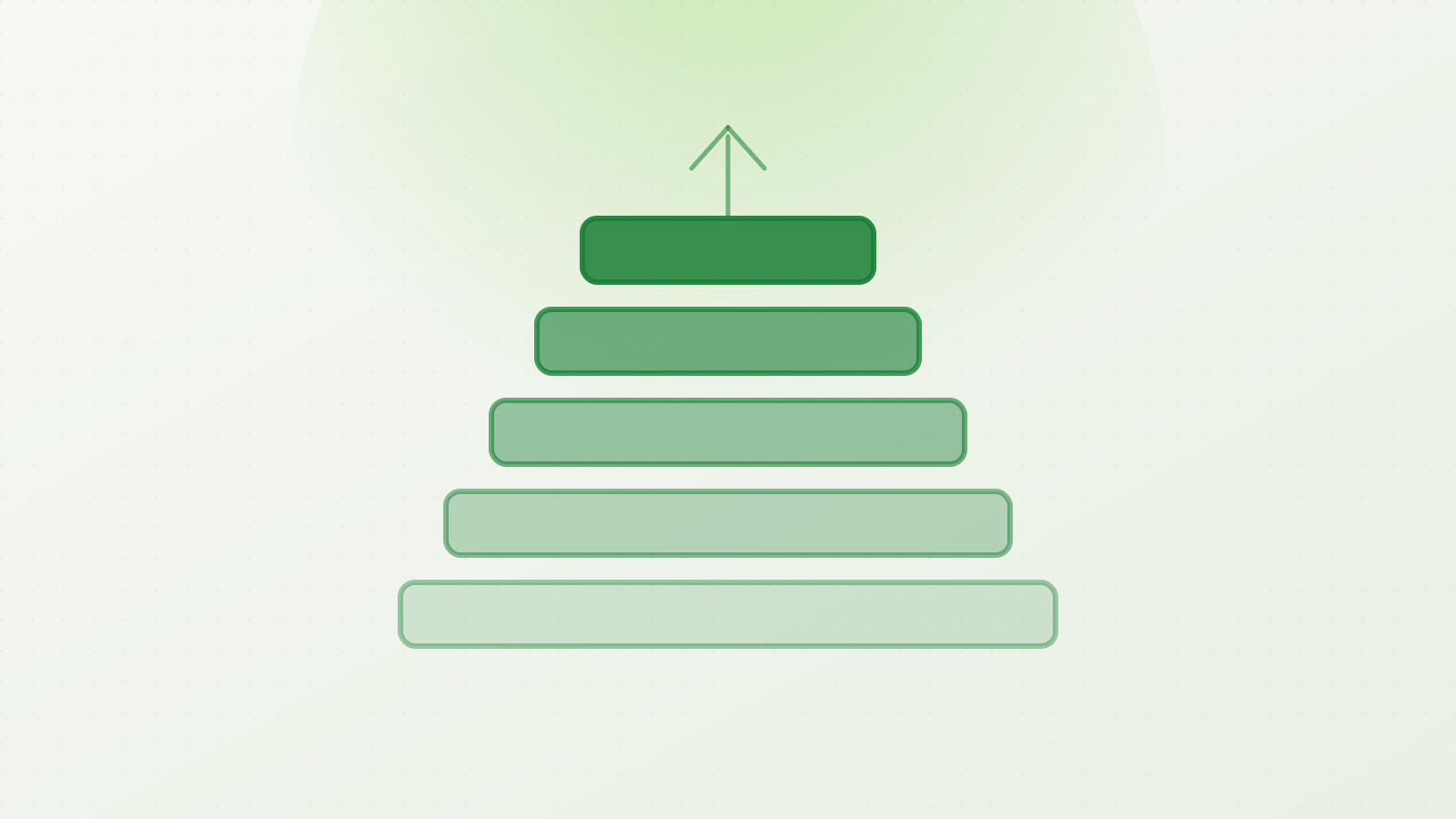
Every leap in software has been a leap in abstraction — punch cards to compilers to the cloud. The next one is not a new language. It is handing implementation to agents and moving ourselves up to judgement.